
TL;DR:
Opening a load-bearing wall for an archway or doorway changes how your structure handles weight, so you can’t just cut and go. Learn about headers, beam sizes, and permits, and work with pros to keep your home safe and sound.
Opening a load-bearing wall to add a doorway or archway can dramatically improve flow and daylight, but it also introduces structural risk.
According to the National Association of Home Builders, structural modifications represent the largest share of professional remodeling expenditures in the U.S., reflecting both their complexity and the significant consequences of getting them wrong.
Unlike cosmetic changes to a non-load-bearing wall or partition wall, creating openings in load-bearing walls alters how vertical loads from the roof, floor, and multiple floors above are carried through the home’s structure. Doorways and archways may appear straightforward once finished, but the framing, supports, and sequencing behind the wall determine whether structural integrity is maintained.
In this guide, you’ll learn how professionals approach beneficial doorways and archways in load-bearing walls, including:
- How structural openings change load paths
- Why doorways and archways are framed differently
- What supports are required before and after the opening is made
- How opening size affects framing decisions
- When permits and structural review are typically required
- Why reviewing related structural work first can prevent costly mistakes
Quick Insight: The finished doorway or archway may look simple, but the structural work happens behind the surface. Proper planning focuses on maintaining the home’s load path while achieving the desired design change.
What It Means to Create an Opening in a Load-Bearing Wall
Before altering a load-bearing wall, you’ll want to understand how creating an opening changes the way weight moves through the structure. You also need to know why doorways and archways require different treatment than non-structural interior changes.
Once that context is clear, the next step is examining how framing and support systems must adapt to handle those redirected loads safely.
- Why creating an opening is not the same as removing a wall
- How loads are redirected once framing is removed
- Why doorways and archways are considered structural work
Why is an opening different from removing a wall?
A doorway or archway may remove only part of a wall, but if that wall is load-bearing, the opening disrupts the load transfer through the building. Loads from the roof, ceiling, and floor joists above do not stop simply because the opening is smaller than a full wall removal.
Planning Tip: Before choosing an opening size or style, consider how the new opening will affect furniture placement, room flow, lighting, and other systems running through the wall. Structural decisions and design goals should be planned together.
What happens once the wall is opened?
When studs are removed to create an opening in a load-bearing wall, the load they carried must be redirected. That weight is transferred through a support system that typically includes headers, posts, or a structural beam designed to carry vertical loads down to the foundation or concrete slab.
Common Mistake: Assuming a smaller opening requires minimal structural work can lead to incorrect planning. Even a narrow doorway can affect a load-bearing wall if it changes how weight moves through the structure.
Why are doorways and archways treated as structural work?
Even when an opening looks decorative, it affects the home’s structure. Doorways and archways in bearing walls must meet structural requirements that differ from openings in non-load-bearing partitions or interior walls used to separate rooms.
Doorways vs. Archways: Structural Differences That Matter
Doorways and archways are both structural openings in a load-bearing wall, but they are not handled the same way during planning and framing. The finished appearance can be misleading, especially with an archway, which often looks decorative while still relying on concealed structural elements.

Design Consideration: Archways often create a more open visual connection between rooms, while doorways can provide clearer separation and privacy. The right choice depends on both the desired appearance and structural requirements.
The table below highlights the practical difference homeowners should understand before moving forward.
| Feature | Doorway | Archway |
| Structural role | Straight opening supported by a header | Decorative opening with hidden structural framing |
| How load is carried | Directly across the opening | Redirected through concealed supports |
| Typical opening height | Limited by framing and header size | Often taller than standard doors |
| Framing complexity | More straightforward | Often more complex |
| Planning considerations | Structural sizing and permits | Structural sizing plus design coordination |
Familiarizing yourself with this difference helps explain why archways often require more planning and design coordination, particularly in modern homes where larger openings are common.
How Load-Bearing Wall Openings Are Supported
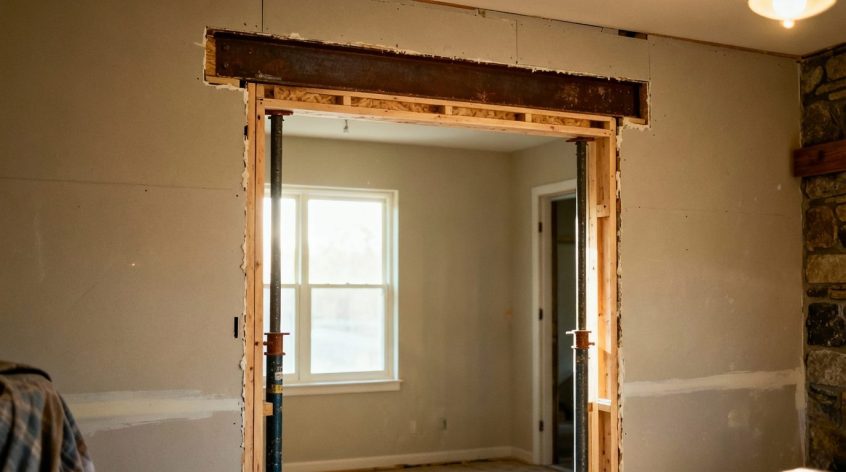
Whether the opening is for doors or an archway, a load-bearing wall must be supported before and after any framing is removed. The goal is to maintain a continuous load path and protect the structure during construction.
Supporting the Wall Before Cutting Begins
Temporary supports are installed to carry the load while studs are removed. These supports prevent movement, shifting, or damage to floors, ceilings, and exterior walls during construction.
Safety Reminder: Temporary supports are not optional during structural modifications. They help maintain stability while the permanent support system is being installed and verified.
Permanent Support After the Opening Is Created
Once the opening is formed, permanent structural elements such as headers, posts, columns, or a new beam take over the load. These components are sized to carry the weight over the linear foot of the opening and distribute it safely through the building.
Why Issues Often Appear Months Later
When support is undersized or improperly installed, problems often develop gradually. Cracks, sagging floors, sticking doors, or movement in exposed framing may not appear immediately; they may show up months later.
Hidden Risk Alert: Structural problems do not always appear immediately after construction. Small signs like new cracks, uneven surfaces, or doors that stop closing properly may indicate movement that needs evaluation.
Load-Bearing Wall Framing Around Doorways and Archways
Framing around a doorway or archway in a load-bearing wall differs from standard wall framing used in non-load-bearing partitions. The framing elements are designed to carry the load around the opening rather than through it.
How Framing Changes at the Opening
Studs that once carried the load are replaced with structural framing that transfers weight to posts or columns on either side. This framing must align with the floor framing below to maintain structural integrity throughout the house.
Why Header and Beam Sizing Matter
Headers and beams are sized based on span, load, and whether the wall supports multiple floors or roof loads. Undersized materials can compromise the support system and lead to long-term movement.
Structural Planning Tip: Beam sizing depends on the specific conditions of the home, including what the wall supports and how the loads transfer below. A beam that works for one opening may not be suitable for another.
Why Framing Mistakes Are Easy to Miss
Once drywall, electrical, plumbing, and finishes are installed, framing errors are hidden. That’s why inspections and structural review are critical before walls are closed.
How Opening Size Affects Structural Complexity
The size of a doorway or archway directly affects the level of structural work required. Larger openings interrupt more of the bearing wall and increase the load that must be carried by beams and supports.

Wider openings often require a structural beam rather than a simple header. Taller openings can reduce wall sections that help stabilize the structure, particularly on the first floor or when walls run perpendicular to floor joists.
There is no universal “safe” opening size for load-bearing walls. What works in one house may not work in another, depending on floor layout, joists, roof design, and how weight is distributed through the building.
Before You Choose an Opening Size: Consider the balance between your design goals and structural limitations. Wider openings may create a more open feel but can require larger beams, additional supports, and more extensive planning.
Permits, Inspections, and Structural Review
Creating openings in load-bearing walls typically requires formal approval to ensure the structure remains safe over the life of the home.
Most local requirements are based on the International Residential Code, which sets minimum standards for structural openings, load paths, and framing used in residential construction.
When Permits Are Required
Most building departments require permits for load-bearing walls, including changes to interior and exterior walls. Doorways and archways affect load paths and are treated as structural alterations.
Permit Checklist: Before construction begins, confirm whether permits are needed, determine if engineering documents are required, and understand what inspections will be performed during the project.
When Structural Review Is Needed
Larger openings, walls supporting multiple floors, or walls tied to exterior walls often require a structural engineer’s review. Engineers evaluate loads, framing materials, and support systems before construction begins.
Why Inspections Matter
Inspections confirm that framing, beams, and supports are installed correctly and match approved plans. This protects the homeowner’s investment, insurance coverage, and resale value.
Why Experience Matters for Structural Openings
Creating a doorway or archway in a load-bearing wall involves decisions about load paths, framing, and sequencing that are difficult to judge without hands-on experience.
Contractor Selection Tip: Ask about previous load-bearing opening projects, experience coordinating with engineers, permit handling, and how temporary support and final framing are managed.
Experienced professionals work with engineers and design teams when required, understand how walls carry weight, and know how to connect new framing to existing structures without compromising safety.
If you’re considering doorways or an archway in a load-bearing wall and want the work done correctly, contact Load-Bearing Pros. Our Utah team understands structural design, permitting requirements, and the realities of working inside older homes where framing is rarely straightforward.
Project Preparation Checklist: Before starting a load-bearing wall opening project, confirm the desired opening design, review structural requirements, understand the timeline, and plan for finishing work after framing is complete.
Professional guidance from the start is the most reliable way to protect your home and avoid costly mistakes later. Don’t hesitate to get in touch with our team.